








Stony The Road We Trod
Volume One and Volume Two
by Rosemary T. Curran
Resource Publications
An Imprint of Wipf and Stock Publishers
Stony The Road We Trod is a family saga spread across two volumes that are inextricably linked and essential reading to acquire an understanding of the joys, triumphs and struggles borne by the Grimke family. A former slave-holding family in Charleston, South Carolina, the Grimke lineage spans across race ethnicity, religion, and cultural norms. Greater than the usual fare of historical fiction, Stony The Road We Trod is the quintessential American story.
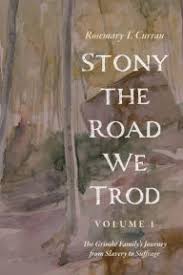
Volume One focuses on Angelina and Sarah Grimke, the two sisters who evolved to become leading abolitionists and feminists in the era leading up to the Civil War. Volume Two takes us on a journey beyond the Civil War to the Reconstruction era when newly emancipated people of color must struggle against new forms of oppression. The slaves have been freed, but the Jim Crow laws enforcing racial segregation are a stranglehold that ensure the marginalization of African Americans.
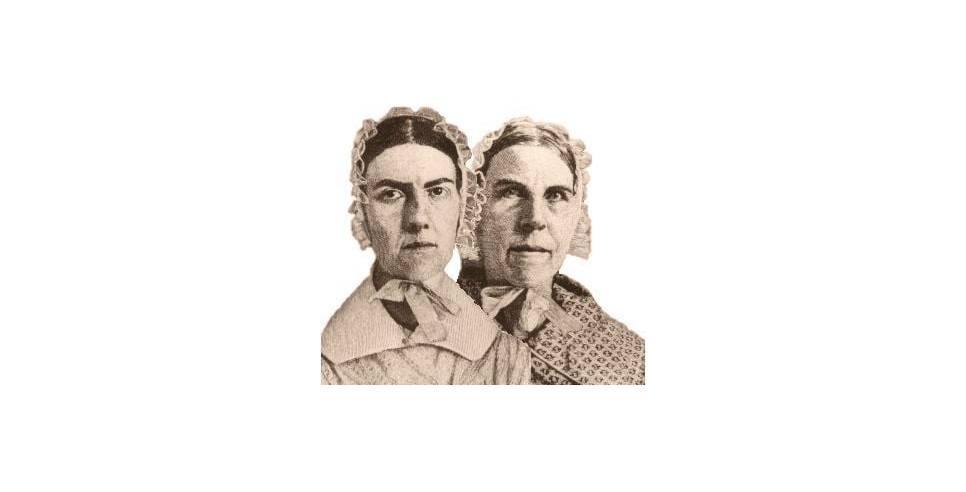
Two sisters, Angelina “Nina” and Sarah Grimke, work in tandem to speak out about the horrors of slavery. They have witnessed American slaves being maimed, beaten, degraded, and killed. They cannot look away from the atrocities they have seen with their own eyes, and in some instances, the mistreatment was committed by members of their own family.
Led by their conscience and a noblesse oblige, the Grimke sisters leave their home in South Carolina. Traveling north, they meet other Americans who believe slavery is an abomination, a crime against humanity and God. Inasmuch as people of faith decry slavery, there are fractures in faith communities, such as the Quakers, who think freeing the slaves is going too far and will crash the manufacturing industry and the food chain supply.
The fact that Sarah and Angelina have left their slave-holding family gives them great credibility among abolitionists. The two genteel southern women are in demand on the speaking circuit, appearing at town halls, churches and private homes. Angelina is a gifted speaker, but Sarah’s true calling is writing the articles, columns and letters that form the core of the anti-slavery movement. The two powerful sisters upset the status quo—treading where women have not gone before. They are women entering the hallowed corridors of power, a fact that does not sit well with many traditionalists, both men and women.
The Grimke sisters grapple with the very essence of human rights. In their quest to speak up against slavery, they have heard the whispers, countless criticisms and outright hostility directed toward them because they are women. There is grave concern that two women are not minding their place by speaking openly in public forums. People might agree with their anti-slavery views, but as women they are told to be mindful of their place in the world. The sisters are pained by the revelation that women’s emancipation is long overdue. Sarah pens a landmark work, Letter on the Equality of the Sexes, that draws respect and admiration as well as ire and controversy. She states, “The rights of the slave and of woman blend like the colors of the rainbow.”
Sarah and Nina come to life—real women, grappling with staying warm when their clothes are ill-suited for the northern winters; they barely subsist on a meager trust fund by practicing a frugality that is unheard of by today’s standards of rampant consumerism. Their plain talk, stoic mannerisms, and simple good deeds give us a portal to look into the culture of 19th Century America before, during and after the Civil War.
Though the sisters experience bouts of fatigue, sickness and the blues, the tenderness they exhibit toward one another is heartwarming. And they often rely on sharp wit to endure the abuses hurled at them from pro-slavery factions and the grueling time spent on the lecture circuit.
The perpetually mismatched colors of Theodore Weld’s socks is a constant source of amusement. You can see Theodore’s old worn coat flapping in the wind. Despite Weld’s unkempt hair, mismatched socks, and the frayed cuffs of his sleeves, he wins Nina’s heart and becomes her husband. Theodore Weld is a man of substance, a fine writer, strategist and organizer who plays a key role in abolitionist politics.
Notable historical figures—Poet John Greenleaf Whittier, Educator James Fairchild, the Philanthropists Lewis and Arthur Tappan, Author Harriet Beecher Stowe, and many others—come and go, and are intertwined in the rich tapestry of the abolitionist movement. Theodore Weld is a star abolitionist and a frequent visitor to the venues where Angelina and Sarah give their talks. Angelina meets John Quincy Adams, former president and then a congressman who has been reticent to take an anti-slavery stance for fear of political fallout. Much to Angelina’s chagrin, he does declare, “My Dear Miss Grimke, if slavery is to be abolished, it is precisely the women who must do it!”
The romance between Angelina and Theodore Weld is genuine and heartfelt. Their marriage is a small private affair. The two sisters rely on each other financially, professionally and emotionally. Since they are inseparable, Sarah takes her place in the new marrieds’ household as a helpmate, doing whatever is necessary to sustain the practical harmony of their lives. Later her role expands to be the chief caretaker of Angelina and Theodore’s three children.
Another thread of the family saga plays out concurrently in Charleston, South Carolina. Henry, the brother of Angelina and Sarah, had three children with his wife Selina. After Selina dies, Henry takes a slave, Nancy, to be his consort, friend and lover. Nancy acts in all ways as much more than a mistress and wields power among all those who dwell on the estate. With Nancy, Henry has three sons: Archibald, Frank and John.
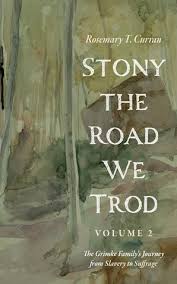
In Volume Two, the abolition movement takes a heated turn in an increasingly polarized nation that ultimately erupts into the Civil War. There are no battles scenes in the story, but there have been events of great violence. In Philadelphia, the Pennsylvania Hall, a temple to free speech, was burned to the ground. The Friends Shelter for Colored Children was also set on fire, and the Bethel Church, the home of the colored congregation, was attacked.
Domestic drama unfolds in the everyday lives of Sarah Grimke, Angelina Grimke and her husband Theodore Weld. With the birth of each child, Angelina questions her ability to be a caring and involved parent. She leaves the nurturing to Sarah, who interacts with the children as a natural caregiver. Their attempts at trying to maintain a work/family balance are no different than the day-to-day struggles that today’s women face.
Angelina misses being in demand on the speaking circuit and relevant to a great cause. While Sarah has all but abandoned her writing, she is more adaptable about accepting the limits that the domestic life has thrust upon her. Over time as the three children develop greater dependency on Sarah, Angelina feels slighted and sees her sister as a rival for the affections of her children.
While the sisters are mired in domesticity, there are numerous squabbles among the children. Sarah’s knack as a caregiver sets her apart from Angelina’s mounting frustration of being unable to nurture her intellect and professional accomplishments. The growing schism between the two sisters is complicated by the fact that the time spent on domestic duties and as caretakers to young children has pushed their career ambitions to the side. Caring for young children and managing a household takes its toll. Women, indeed, cannot have it all.
There are brief respites from domestic drudgery. The two sisters and Theodore Weld have collaborated on a book: American Slavery as It Is which becomes a successful and satisfying achievement. The January visit from Bronson Alcott along with his daughters Louisa and May is rewarding and memorable. The image of the Alcott girls skating with the young Weld children on a winter pond is a memory to hold onto.
The Grimke sisters are unaware of the existence of Nancy and her three boys. As long as Henry was alive, the family he kept in secrecy was protected from the harsh reality of the slave market. Upon Henry Grimke’s death, Nancy and her three boys are no longer protected. Montague, Henry’s son from his first marriage, inherits his father’s estate and embarks on a reign of terror against Nancy, threatening to sell her sons on the open slave market.
One boy, Frank, escapes. Cruel retribution is paid to his brother Archie, who is beaten by the overseer Isaiah. Nancy is determined to get her boys to safety and is soon able to get them out of South Carolina, presumably to enroll in school up north. When Frank and Archie arrive, they learn that they have been deceived. They are not going to school at all, but are expected to work as low-wage laborers, essentially slaves.
The parallels to the political climate of today are uncanny. The immigration issue of the 21st Century bears a resemblance to the divisiveness over slavery in the late 19th Century. On Liberation Day in Charleston in February, 1865, Archie and Frank Grimke remark that they are free at last. They show endless gratitude to their mother Nancy, who gave them the foundation to one day become learned, accomplished men. “Mama lives on the honey of her soul.”
The rift between Angelina and Sarah takes a devastating turn. Sarah leaves the household and moves into a small room of her own in New York City. As she took stock of her life, she realizes that she was alone, sixty years old, and has little to show for all of her hard work: a poor public speaking career, a few pamphlets, and a painfully close attachment to children who were not her own. Being alone and unencumbered gives her the opportunity to start writing again.
While the Grimke sisters are living separate lives, Nancy’s sons Archibald and Frank are making their way in the world, becoming learned men. Frank follows a calling to be a minister in the South, while Archie is on the path to becoming a prominent lawyer.
The sisters cannot stay apart for long. Soon they reconcile and move to Belleville and undertake the education project at Raritan Bay. The sisters taught at a coeducational and racially integrated school located at Raritan Bay Union Cooperative. The school was run by Theodore Weld. The Raritan Bay Union was located in the south end of Perth Amboy, where across the bay Staten Island could be seen. Another move brings them to Hyde Park, just outside of Boston, and this is where they are living when they learn of their nephews who were sired by their brother Henry and a slave Nancy Weston.
Archie and Frank take great care to pay top dollar for their wardrobe before calling on their Aunts. Donned in top hats and tails, they arrive at the Grimke – Weld home, where austerity and plain clothes are a stark contrast to their flashy attire. The evolution of the career paths of the two young men –Archie graduating from Harvard Law School, and Frank graduating from Princeton Theological Seminary, after spending two years at Howard university, are remarkable.
When Sarah dies in 1873 she leaves behind a legacy that illuminates all members of her family, a family that now includes her young nephews who had been born as slaves. These are the words spoken during her eulogy: Her deeds were wise and beautiful: help to the poor, sympathy with the suffering, consolation to the dying. She had finished her course of duty; she has kept the faith of friendship and sacrifice.”
Archie and Frank confront the spread of Jim Crow laws and a regression for people of color through most of the country. Archie is a powerful force for a way forward. Along with W.E.B Dubois, he is a leader of the Niagara Movement that was composed of black activists seeking equal rights. Later he was a cofounder of NAACP. Frank married Charlotte “Lottie” Forten. Their child Theodora died after five months. Archie married a white woman, Sarah Stanley; they have daughter Angelina who is named for her Aunt Angelina Grimke Weld, and is later known as “Nana.”
Nana is a difficult young woman, brilliant, uncompromising and talented. Her mother, Archie’s wife, suffers from mental illness is unable to care for her. “Nana” is raised to be a woman of letters and learning by both her father and her Uncle Frank. Frank tells Nana: “none of us have chosen to live our lives without taking risks when they are dictated by our conscience.”
Nana's becomes a gifted poet and playwright. Her play Rachel or “Blessed the Barren” was among the works that inaugurated the Harlem renaissance.
Stand up for good, be led by one’s conscience, pursue a moral quest to honor humanity, and live a life of public service are the themes that drive this magnificent work and why it is a worthwhile read in the America of today. The reverend Francis Grimke’s sermon “The Way Forward: Are we called to be weak or strong?” is a call to action. “Be assured that nothing is gained by compromising with evil.”
The abolition activist Theodore Weld lives to be ninety-one, outliving the Grimke sisters. His life was a testament against social injustice. He honored all that is good and uplifting about humanity. Upon musing about learning how eagles fly, he ponders, “And I want to know what makes some humans cruel and some kind.” This is the same question we still must ask today, and, for which, there are no easy answers.
History comes to life in good fiction. Although the two volumes are historical fiction, the author is faithful to the most minute of details that have been culled from manuscript collections, including diary entries, notes, letters, newspapers, published papers, photographs, memorabilia, as well as books and articles. It is a truly astonishing work, one that is more relevant now as the America of today struggles to preserve its democracy.

Patricia Vaccarino
Patricia Vaccarino is an accomplished writer who has written award-winning film scripts, press materials, articles, essays, speeches, web content, marketing collateral, and eleven books.