








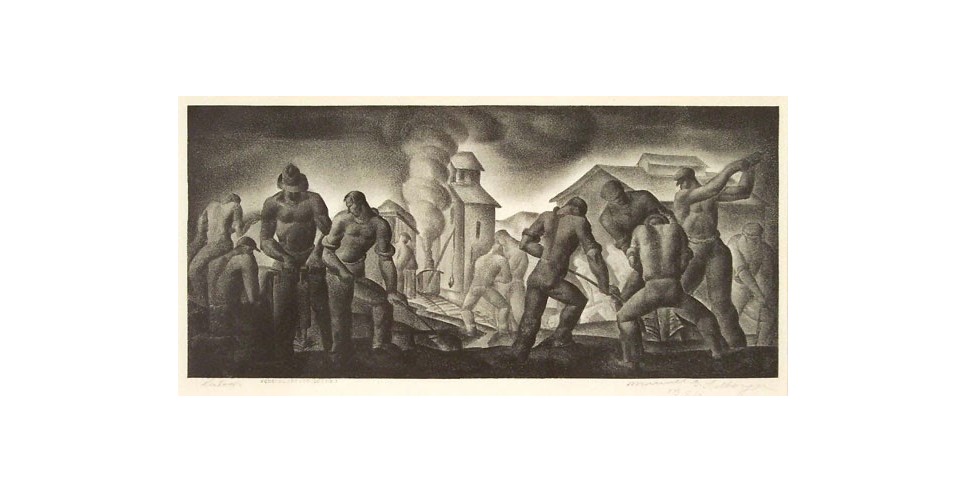
If conservatives accept President Donald Trump’s agenda to dismantle our republic’s laws and principles, they could go down The Road to Serfdom, as Friedrich A. Hayek’s book title suggests.
Hayek, an Austrian-British economist and Nobel laureate, believed that “the system of private property is the most important guarantee of freedom.” Any constraints on the exchange of property in the marketplace lead to socialism, which he considered a form of totalitarianism.
This logic leads many to adopt Hayek’s philosophy of libertarian conservatism, which links individualism, morality, and the free market as the unified force necessary to protect individual freedoms.
Trump’s attacks on Democrats flow from this philosophy as he attacks liberal planning, programs, and funding as radical socialist actions. These assumptions are central to the Heritage Foundation’s Project 2025 initiatives, which he is implementing. Trump is determined to destroy the “deep state.”
Although he died in 1992, Hayek’s formulation of libertarian conservatism lives on, shaping conservatives’ and Republicans’ game plan to deconstruct our democratic republic’s core institutions, as Steve Bannon, Trump’s earliest White House advisor, boasted.
Think tanks such as the Cato Institute, the American Enterprise Institute, and the Manhattan Institute align their efforts with libertarian conservatism. But they represent only the tip of a glacier of similar organizations within the State Policy Network (SPN), which has 162 members across all 50 states.
Some work closely with ALEC; a gathering of conservative state legislators and private-sector representatives that drafts and passes approximately 200 model bills a year based on libertarian conservative principles.
ALEC works to repeal existing liberal programs at the state level. At the federal level, Trump protects his Executive Orders, which are designed to dismantle federal agencies he considers liberal, by appointing justices sympathetic to libertarian-conservative principles.
In his first term, White House counsel Donald F. McGahn II, said Trump was pairing the administration’s deregulation orders with judicial nominees opposed to the federal bureaucracy’s growing power. To aid in choosing jurists, Trump relied on Lee Liberman Otis, a founder of the libertarian conservative Federalist Society.
However, Trump’s Executive Orders and his Big Beautiful Bill sometimes significantly clash with Hayek’s politics. This becomes evident when he imposes high tariffs that severely restrict the free market, or when he requires citizens to carry I.D. cards to participate in elections, thereby infringing on individuals’ privacy rights.
Despite introducing policies that blatantly contravene Hayek’s principles, Trump amplifies Hayek’s prediction that socialism will inevitably lead to fascism. Nevertheless, if Trump’s agenda were adopted, his followers and enablers would go down the road that Hayek most feared, the loss of individual rights.
According to Hayek, the rise of fascism is not a reaction against government efforts to plan the economy but rather a necessary outcome of attempts to regulate the free market. In that process, it steals money from those who succeed in the marketplace.
This is dramatized by Trump calling Democrats radicals and fascists when they try to push energy consumption toward sustainable energy resources, such as those provided by wind and solar energy, rather than coal.
Democrats regulate coal production to reduce airborne pollutants from coal, which increase the costs of illnesses arising from them. These costs are either paid out of individuals' pockets or by the government to cover health care plans.
However, industrial regulations likely reduce short-term profits among coal producers. According to credible news reports, their executives, unlike most civilians, held a “dinner” meeting with Trump at his Mar-a-Lago club in April 2024. There, he encouraged them to raise $1 billion for his campaign. He described this exchange as a deal, saying they would see regulatory and tax benefits if he were re-elected.
This scenario underscores Hayek’s central weakness: ignoring that an unregulated market produces greater wealth, which gives the wealthiest greater leverage to protect their property interests than the average citizen. Wealth translates into political power, enabling it to shape the marketplace in its interests.
Hence, personal freedoms expand or contract depending on the amount of wealth one has. Hayek’s writings were framed on the authoritarian experience of Nazi Germany and Communist Russia’s planned economies and culture. He sees their authoritarian rule as an outgrowth of socialism, of any sort, even democratic socialism.
Yet he does not consider prior non-socialist governments that controlled economic and cultural conditions, such as Russia’s Czarist Government, where 80% of the population were peasants, with half being effectively living as serfs.
By applying the terms “free market” to describe the ideal economic system for exercising freedom and “socialism” to describe a system that morally degrades individuals’ freedoms, Hayek constructs exaggerated models of reality, known as typologies.
In his writings, Hayek drew on Max Weber’s work, which introduced typologies to understand social and economic phenomena through individual action. Using typologies to draw generalizations can help explain social change, but they are not useful if treated as inflexible behavioral categories that predict the future.
Using idealized behavioral types as an unquestioned predictor of historical change will project the future as either a utopia or a dystopia. Both the far right and the far left are guilty of this tendency.
Socialists who believe that socialism must be the path to a utopian worker-run state end up creating a state that concentrates political power in a single bureaucratic organization, smothering individual freedoms.
Likewise, free-market capitalists, who believe that any regulation of an individual’s property is an infringement on their freedom, end up with concentrated wealth and power among an elite that can ignore the welfare and freedom of others.
Conservative free-marketer Walter E. Williams wrote the foreword to Road to Serfdom, stating that there cannot be personal liberty without free markets. There are no free markets in the world; all are regulated in some way. Those with the fewest regulations accumulate wealth, allowing a sliver of the total population to possess it. That wealth translates into political power to use national resources to their benefit at the expense of the rest of the population. In effect, the freedom to achieve a satisfactory standard of living for all is limited.
We can be experiencing a real road to modern-day serfdom, where most people work hard to sustain an affordable lifestyle as they compete for limited resources, be they jobs, shelter, food, education, or simply free time to smell the roses. But this is not a social caste system.
The market economy is based on competition, which creates opportunities for some to benefit from participating in the marketplace. Those opportunities may arise from a range of factors, including technological change, social networking, inherited wealth, and even political shifts in the power structure.
Conservatives point to examples of minorities who rise from lower-income backgrounds to succeed in the marketplace. Williams’ life is one. He overcame racist and economic barriers, but he did so with government financial assistance.
Williams grew up without a father, living with his mom and sister in a government-subsidized housing project. He attended a public community college for a semester, then became a cab driver before serving as a private in the army.
He successfully defended himself against courts-martial for challenging racially slurred orders given to him. He also wrote a letter to President John F. Kennedy denouncing the pervasive racism in the American government and military. Later, he earned his PhD at publicly funded state universities and then taught at them.
Despite benefiting from public funds that provided him with access to housing, education, and employment, he became an advocate for free-market capitalism. This was due in part to the influence of the conservative economist and social theorist Thomas Sowell, who shared a similar background of growing up as a poor, Black, fatherless child. Both became celebrated for their libertarian conservatism.
The life experiences of Williams and Sowell, who achieved success through public taxation, stand in stark contrast to their mission in life to oppose public taxation and business regulation, since they viewed them as oppressive to an individual’s freedom.
How can two Americans, who have experienced racial discrimination, are from the lower economic class, and have benefited from liberal economic policies, embrace the capitalist vision that a free-market society, unchained by government restrictions, can better provide for individuals?
Williams and Sowell, although a minority within the Black community, appear to hold beliefs that are accepted by the majority of those in the white community, who have consistently voted for conservative Republicans in Presidential elections. Regardless of their race, they all subscribe to the need to protect individual rights from big government.
Trump’s electoral and marketing achievements position him as a Moses-like figure for voters angry at big government. He blamed the Democrats for failing to deliver on their promise of a better life.
Instead, Trump views himself as leading them to a promised land by making America great again. It will no longer waste public funds protecting the rights of individuals who are not committed to restoring America to what it was when whites were the majority population.
It’s a message that, as expected, resonated primarily with white voters. According to Pew Research, non-Hispanic white voters made up at least 84% of Trump’s support in the 2024 election. However, Pew also found that white voters make up 79% of Republicans and those leaning Republican. This means that Trump received enough votes from white Democratic-leaning voters to win the election.
Trump dismantled the Republican Party’s political establishment in 2016. Trump won the 2016 Republican Primary, the largest field of presidential candidates in American history, with 17 major candidates, 45% of the popular vote, and 59% of the pledged delegates.
He then went on to win a second term by dominating the party to the extent that Republicans in Congress feared his criticism. He issued clear warnings that they must endorse his agenda or else he’d call his followers to defeat that person in their Republican primary.
With few Republicans willing to criticize Trump, he gained a free pass to do as he pleased. So he set aside the Reagan-era legacy as a doctrine and replaced it with his own brand of Republicanism, which leaned heavily toward libertarian conservatism, more than any previous Republican president.
Trump also reinvigorated his following by pushing Christianity. Just as importantly, ethnocentrism, which judges other cultures by their closeness to one’s own culture, and can exhibit a cultural bias, leading to stereotypes that discriminate. Nevertheless, for Trump’s core supporters, this matched their beliefs in a supreme Christian God and in White America as representing the best in America.
The overlap of libertarian conservatism, Christianity, and ethnocentrism forms a strong voter constituency that often aligns on issues as long as those issues don’t endanger the other’s special interests.
The January 6 insurrection can be seen as a manifestation of this alignment, as it declared war on the “deep state” that stole the election from Trump. Of those charged in the Capitol insurrection, approximately 90% were white. Many carried crosses or signs referencing Christianity, and “Freedom” was the most common sign.
This coalition will continue to support Trump because he appears to be another outsider fighting against big government trampling of individual rights. However, his policies are beginning to challenge that image as federal agents demand IDs from citizens, break into people’s homes to arrest suspects without evidence, and expand the power of some of the largest corporations to the detriment of consumers.
Doubts about Trump’s role as an outsider were reinforced by the Jeffrey Epstein files. Trump was a prominent member of Epstein’s immoral community of the wealthiest and most powerful men in America.
Hayek wrote in his Road to Serfdom that for a ruler, whether a person or a party, to achieve their ends, they must create a power of a magnitude not previously experienced in that country.
This insight applies to Marxists and capitalists alike. Marx and Hayek both sought a better future for humanity by, directly or indirectly, establishing a central authority to reallocate material resources, money, and cultural values toward an ideal society.
Carried to its inevitable end, it results in authoritarian rule. That end can be achieved either through direct physical violence, as in Russia or China, or through the manipulation of institutions, as in Germany and Italy.
It is a fair question to ask whether Trump is following the same path, given that he is exercising immense executive authority not seen since the Civil War.
He has ignored more than 200 court rulings against his actions, coddled the largest corporations with tax benefits, and relies on the very wealthiest to deliver his populist slogans to the public. Research by Thom Hartmann shows that Trump has received money from 150 billionaires, while his 2024 presidential opponent, Kamala Harris, has received money from only 3.
Most unsettling is Trump’s effort to change our diverse culture into the “right” one. It’s happening before our eyes today.
What happens to individual freedoms when Homeland Security Department Secretary Kristi Noem remarks on the need to elect the “right people” to get the “right leaders”? Or when the Department of Defense has a Christian Nationalist lead the Pentagon Prayer Service?
Who chooses the “right leaders”? Who determines the “right” religion to promote on government property for government employees? Those with the political power to do as they please.
Aren’t these road signs that Trump is leading us to becoming a nation of normal, everyday citizens being bullied like modern-day serfs? Is this what conservatives voted for?
If you like this piece, become a Patreon patron or make a single contribution to help me reach others
Nick Licata is the author of Becoming A Citizen Activist and Student Power, Democracy and Revolution in the Sixties. He is the founding board chair of Local Progress, a national network of over 1,300 progressive municipal officials and a Seattle City Councilmember for 18 years.
PLEASE SHARE THIS PIECE – through https://nlicata.substack.com, Or just forward this email to friends and others.